
Crypthecodinium Research
Meet Crypthecodinium
Crypthecodinium doesn’t need sunlight like most algae. Instead, it’s heterotrophic, digesting organic material around it to grow and thrive. What makes it truly remarkable is its natural ability to produce DHA, a powerful omega-3 fatty acid that nourishes our brains, eyes, and hearts.
DHA (docosahexaenoic acid) is essential for building brain cell membranes, supporting memory and learning, maintaining retinal health for clear vision, and promoting heart wellbeing. Our bodies can’t make DHA on their own, so we typically rely on fish—but Crypthecodinium produces it independently, offering a sustainable, eco-friendly alternative that taps directly into nature’s ingenuity.
Within each Crypthecodinium cell, DHA is stored in tiny lipid pockets, like miniature vaults brimming with potential. When nutrients are scarce, the algae instinctively hoard fats and even some starch, building up reserves in preparation for challenging conditions. It’s this natural strategy that allows these tiny cells to become a powerhouse of omega-3s.
In short, Crypthecodinium may be small, but with careful cultivation, it holds enormous potential to help us produce the omega-3 fats our bodies need—sustainably, efficiently, and without relying on fish.
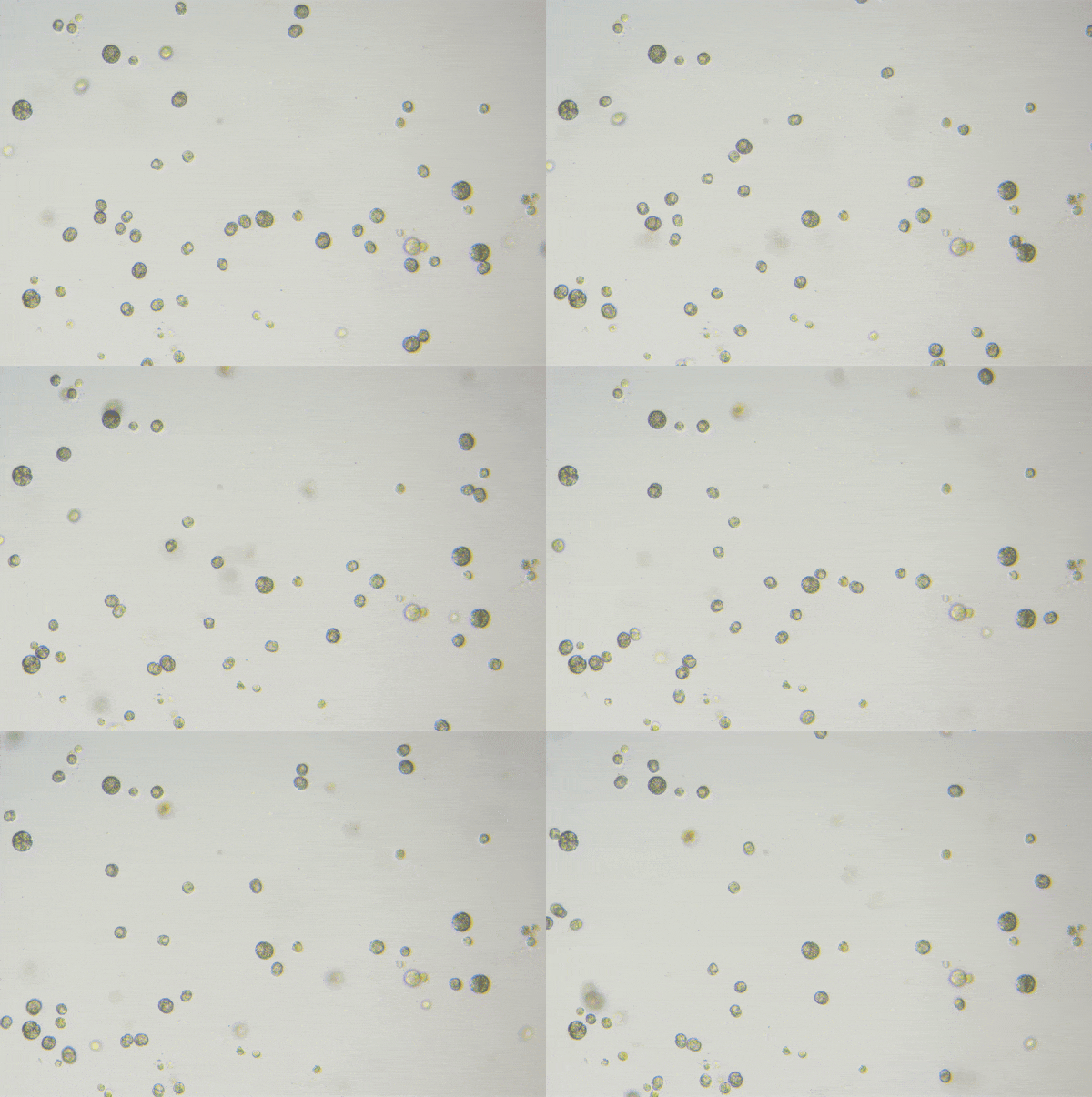
Our Research:
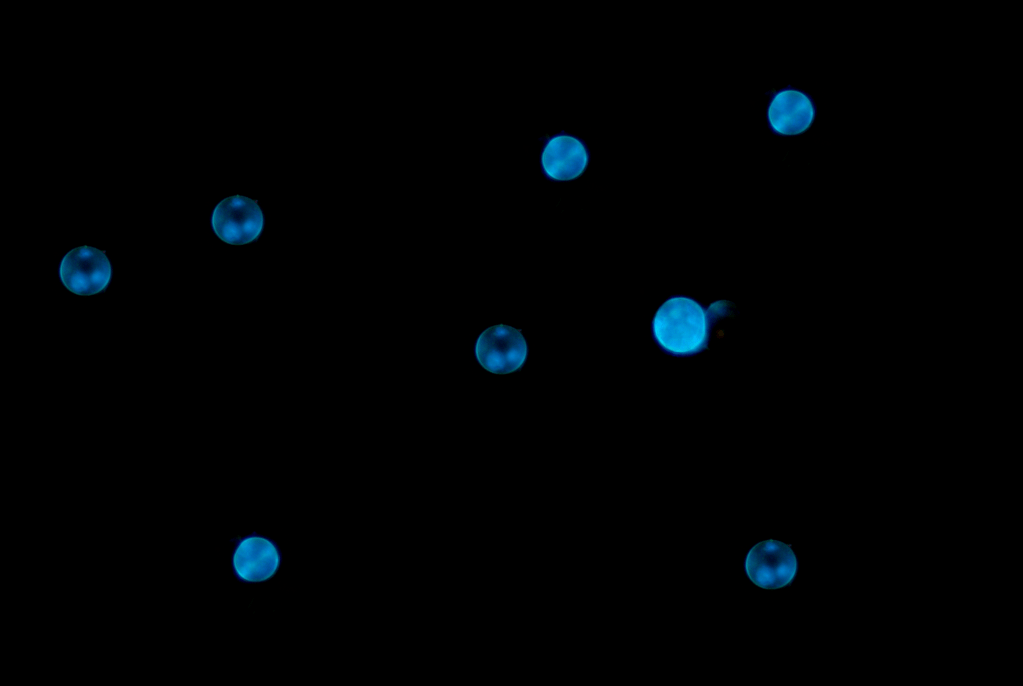
Algae Staining:
There are many types of stains used for algae, each revealing different features under the microscope. Using spectral microscopy, fluorescent dyes illuminate the cells in captivating ways, highlighting lipids or helping to distinguish species.
This approach reveals lipid patterns and cell structures under fluorescent light, hinting at the hidden complexity of these remarkable microorganisms.
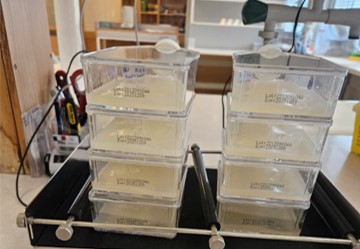
Medium Experiments:
The growth medium serves as both the algae’s home and source of nutrients, shaping how it develops and what it produces. By exploring different compositions, we uncover conditions that influence DHA and other valuable compounds, revealing the potential hidden in each strain.
This research is especially exciting with new species, where each experiment offers fresh insights into growth, lipids, and biological possibilities.
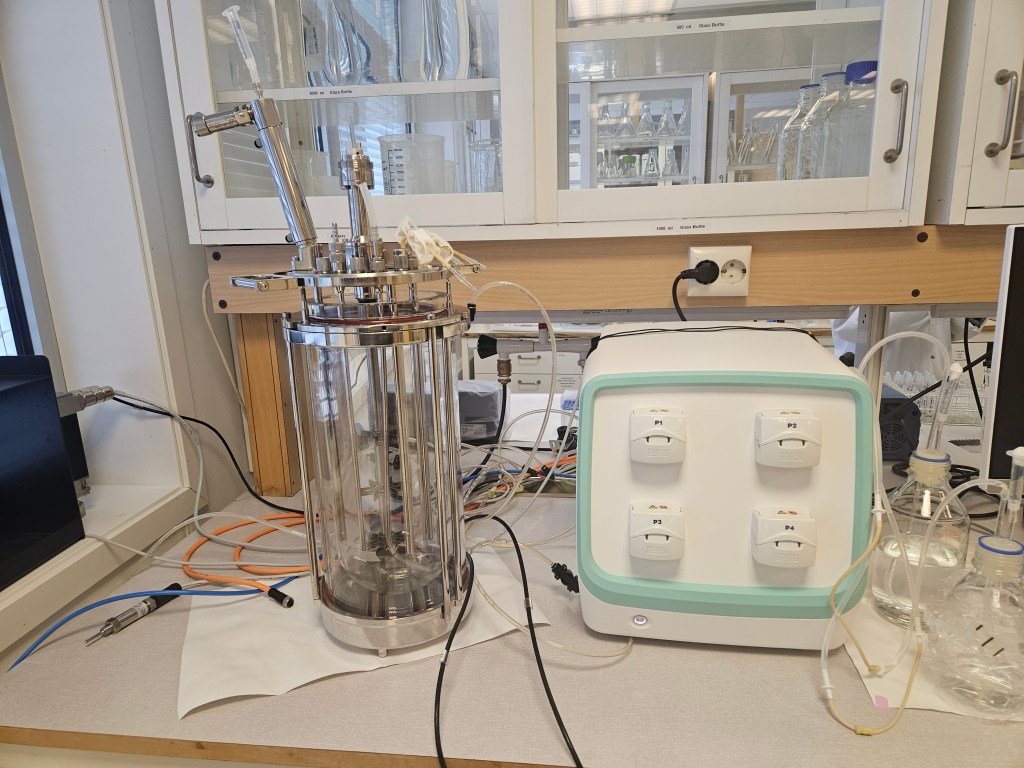
Fermentation:
Heterotrophic microalgae are especially suited to fermentation, making it the most effective way to explore their potential at scale. Using fermentation to cultivate the algae, DHA and other valuable compounds can be produced in quantities far beyond what smaller experiments allow.
This approach provides a unique view into algal growth and lipid production, revealing the remarkable productivity and versatility of this tiny microorganism.
Interested in what we do? Please reach out — we’d be happy to share more about our work and explore opportunities to collaborate.
Contact
Org. no: 924 946 490
Menu
© Arctic Algae 2026
