Microalgae-Based Oral Vaccines in Aquaculture
Using live microalgae as carriers for oral vaccines offers a practical, low-stress method to protect fish against bacterial and viral diseases. The algae encapsulate antigens, safeguarding them through the digestive tract and stimulating immune responses, while also supporting gut health and enabling scalable mass vaccination in aquaculture operations (Ding et al., 2019; Poulsen et al., 2019).

We are developing scalable algae-based oral vaccines that allow mass immunization of farmed fish, reducing stress and handling while improving fish health and survival—providing practical, low-impact disease management solutions for aquaculture.
Our Goal
Microalgae Vaccine Information:
Why Use Oral Vaccines in Aquaculture?
•Current vaccination methods (injection & immersion) are stressful for fish, labour-intensive, costly, and hard to apply.
•Oral vaccines provide a simple, scalable, and stress-free alternative.
•Algae act as safe, digestible carriers for oral vaccines, enabling low-cost and sustainable production.
Microalgae as vaccine platforms:
•Recombinant proteins in dried algae have been shown to remain stable over time, offering potential advantages for storage and handling compared with traditional vaccines.
•Feed compatibility: Algae-based vaccines can be delivered orally as part of fish feed.
•Natural protection: Algae cells act as a natural encapsulation system, protecting proteins from degradation in the gastro-intestinal system in fish.
Benefits of Microalgae as a Vaccine:
•Microalgae provide nutrients and natural immunostimulants that boost fish immunity, improve disease resistance, and protect recombinant proteins in the gut.
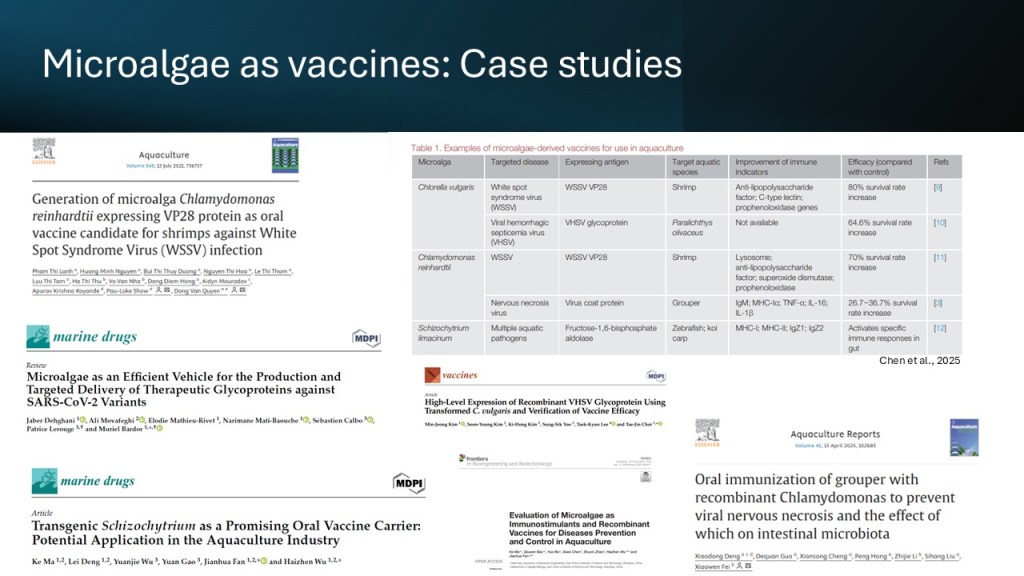
•Oral vaccination using transgenic microalgae expressing viral antigens can effectively enhance disease resistance in aquaculture species, resulting in significant survival improvements (Kim et al., 2023).
Broader applications for microalgal-based vaccines :
•Potential for broader human and veterinary vaccine applications using algae as oral delivery platforms.
•Development of multivalent vaccines (targeting several pathogens at once).
•Improve genetic engineering tools to raise antigen yield and stability.